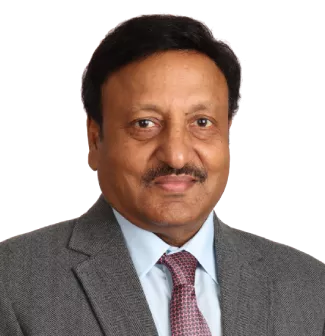
Mr. Rajiv Kumar
Mr. Rajiv Kumar, aged sixty-six (66) years, a 1984-batch Ex IAS officer, is widely regarded for his transformative role in revitalising India’s banking and financial sector during a period of significant systemic stress from 2017 -2020. He retired as Finance Secretary of India in February 2020. Post retirement Mr. Kumar also briefly served as Chairman of Public Enterprises Selection Board (PESB).
As Secretary, Department of Financial Services (2017–2020), he assumed charge at a time when public sector banks were grappling with high levels of unrecognised NPAs, capital inadequacy, lenders frozen out of fresh credit, gold plating being rampant, equity and debt being diverted and recirculated to leverage fresh credit, governance challenges including large consortiums, NBFCs struggling to fill micro credit gaps post demonetization, Ponzi schemes defrauding citizens, etc.
Within a fortnight of Mr. Kumar’s joining the Department of Financial Services, accounts of about 3.38 lakh shell companies were frozen targeting the architecture of black money itself. Curbs on Ponzi schemes followed, by getting The Banning of Unregulated Deposits Schemes Act, 2019 passed. Through decisive policy direction and execution, Mr. Kumar led a comprehensive clean-up of public sector bank balance sheets by mandating transparent recognition and provisioning of NPAs and by enforcing accountability among borrowers under the Insolvency and Bankruptcy Code framework. His approach addressed the long-standing twin balance sheet problem by restoring credit discipline and rebooting the creditor–debtor relationship. These efforts, structured around the “4R strategy” of Recognition, Resolution, Recapitalization, and Reforms, enabled a sharp turnaround in the banking sector, with public sector banks returning to sustained profitability and improved asset quality.
Mr Kumar’s career saw him implement several initiatives leading to clean banking. His tenure saw decisive action against illicit financial practices, strengthening regulatory oversight of cooperative banks, and enforcing accountability in high-profile default cases. For loans of ₹50 crore and above, passport details became mandatory - closing the door on big borrowers who might flee before action caught up. Fraud checks, specialised monitoring above ₹250 crore, and IT-based risk scoring on 34-plus factors replaced soft signals with loose controls, inbuilt in lending by large consortiums of often more up to 25 banks. A total reset of Creditor-Debtor relationship with loud and clear message that money has to be lent prudentially and debtors must pay back. A key pillar of this transformation was the unprecedented recapitalisation of public sector banks, involving capital infusion exceeding ₹3 lakh crore, which helped restore solvency and lending capacity. This was complemented by a far-reaching consolidation exercise, under which 27 public sector banks were merged into 12 stronger entities, alongside rationalisation of Regional Rural Banks into a more efficient one state–one RRB structure. The consolidation of these public sector banks was spearheaded by Mr Kumar. These measures significantly improved operational efficiency, scale, and competitiveness across the public banking system.
Mr. Kumar also strengthened governance, risk management, and regulatory oversight across banks by institutionalising specialised monitoring for large exposures and implementing technology driven risk assessment systems. He placed equal emphasis on depositor protection and financial stability, including enhancing deposit insurance coverage from ₹1 lakh to ₹5 lakh.
Beyond balance sheet repair, Mr. Kumar drove growth-oriented and inclusion-focused initiatives within the financial system. He accelerated financial inclusion under the Jan Dhan framework, expanded access to banking services, and directed credit growth towards sectors such as retail, agriculture, and MSMEs while maintaining underwriting discipline. His coordinated response to liquidity challenges in the NBFC sector following a crisis, along with reforms such as the restructuring of a public sector Bank and implementation of the Enhanced Access and Service Excellence (EASE) agenda further strengthened the resilience and credibility of India’s financial system.
Mr. Kumar has also served as the 25th Chief Election Commissioner of India; world records with participation of ~642 million electors and ~312 million women electors were created during 2024 General Elections to Lok Sabha.
Mr. Kumar either sat on or chaired most of the bodies that touch the country’s financial architecture - the Central Board of Reserve Bank, the Financial Stability and Development Council, the Financial Sector Regulatory Appointments Search Committee, Secretary of the Appointment Committee of the Cabinet (ACC), the Public Enterprises Selection Board, the Bank Board Bureau, the Boards of State Bank of India and NABARD, an expert committee on the Central Bank’s economic capital framework and Committee on restructuring of NITI Aayog.
Mr. Kumar does not hold directorship or full-time position in any other company or body corporate.