
Why Choose Us?

Financial Support
-
Financial Support
-
Loan Features



Documents you need to start
More about the Sustainable Livelihood Initiative
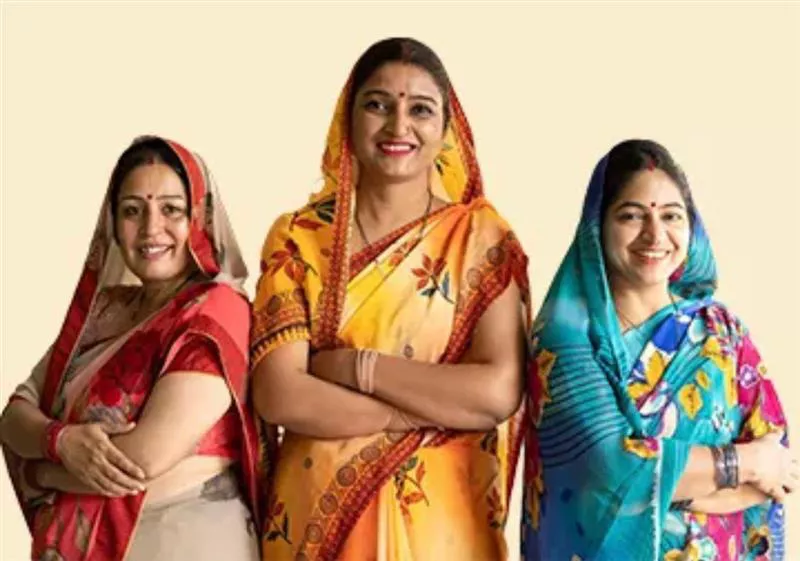
HDFC Bank SLI empowers individuals, particularly women and farmers, with access to credit, fostering financial independence and reducing dependency on informal money lenders.
Features include convenient loan accessibility, stress-free application processes, collateral-free loans for professions like livestock rearing, handicrafts, tailoring, and support for setting up businesses such as grocery shops.
Interested individuals can apply for HDFC Bank SLI by contacting their nearest branch or through designated bank representatives, who guide applicants through the application process and provide necessary assistance.
Dues:
mean, the principal/interest/any charges levied on the loan account which are payable within the period stipulated as per the terms of sanction of the credit facility.
Overdue:
mean. the principal / interest/ any charges levied on the loan account which are payable ,but have not been paid within the period stipulated as per the terms of sanction of the credit facility. In other words, any amount due to the bank under any credit facility is 'overdue' if it is not paid on the due date fixed by the bank.
Relevance of the Principle of 'First In First Out' (FIFO) in appropriation of payments into the borrowal account:
The Principle of FIFO i.e., 'First In, First Out' accounting method is relevant to arrive at the No.of days of overdue for determining the SMA / NPA status. The FIFO principle assumes that, the oldest outstanding dues in the loan account needs to be cleared first .The FIFO method thus requires that what is due first must be paid by the borrower first. For example;
if in any loan account as on 01.02.2021 there are no overdues and an amount of Rs. X is due for payment towards principal instalment/interest/charges, any payment being credited on or after 01.02.2021 in the loan account will be used to payoff the dues outstanding on 01.02.2021
Assuming that nothing is paid /or there is partial payment (Rs Y) of dues during the month of February, the overdue as on 01.03.2021 will be Rs .X-Y.
Additionally, an amount of Rs.Z becomes due as on 01.03.2021, Now any payment I partial payment into the account on or after 01.03.2021 will be first utilized to payoff the partial due of 01.02.2021 ( Rs X - Rs.Y) If there is more recovery than the Rs X - Rs Y. then. After recovering dues of 01.02.2021, the remaining amount will be treated as recovery towards due of 01.03.2021.
Age of oldest Dues:
The age of oldest dues is reckoned in days from the date on which the oldest payment is due and continues to remain unpaid In the aforesaid illustration, if the Dues relating to 1st February 2021 remain unpaid till 01.03.2021, the age of the oldest dues is reckoned as 29 days on 02.03.2021.
Classification as Special Mention Account (SMA) and Non-Performing Asset (NPA)
Lending institutions will recognize the incipient stress in loan accounts, immediately on Default,by classifying them as Special Mention Accounts (SMA) The basis of classification of SMA / NPA Category shall be as follows:
| Loan in the nature of Term Loans | Loans in the nature of cash credit / over draft | ||
|---|---|---|---|
| SMA Sub categories | Basis for classification – Principal or interest payment or any other amount wholly or partly overdue | SMA Sub categories | Basis for classification – Outstanding balance remains continuously in excess of the sanctioned limit or drawing power, whichever is lower, for a period of |
| SMA-0 | Upto 30 days | ||
| SMA-1 | More than 30 days and upto 60 days | SMA-1 | More than 30 days and upto 60 days |
| SMA-2 | More than 60 days and upto 90 days | SMA-2 | More than 60 days and upto 90 days |
The asset classification norms of Agricultural advances which are based on Crop Season shall continue as hitherto.
Non-performing Asset:
Non-Performing Asset (NPA) is a loan or an advance where:
i. interest and/ or instalment of principal remains overdue for a period of more than 90 days in respect of a term loan,
ii. the account remains 'out of order' as indicated below, in respect of an Overdraft/Cash Credit (OD/CC),
iii. the bill remains overdue for a period of more than 90 days in the case of bills purchased and discounted,
iv. the instalment of principal or interest thereon remains overdue for two crop seasons for short duration crops,
v. the instalment of principal or interest thereon remains overdue for one crop season for long duration crops.
'Out of Order' Status:
An account shall be treated as 'out of order' if:
i. the outstanding balance in the CC/OD account remains continuously in excess of the sanctioned limit/drawing power for 90 days, or
ii. the outstanding balance in the CC/OD account is less than the sanctioned limit/drawing power but there are no credits continuously for 90 days, or the outstanding balance in the CC/OD account is less than the sanctioned limit/drawing power but credits are not enough to cover the interest debited during the previous 90 days period.
Illustrative movement of an account to SMA category to NPA category based on delay / non payment of dues and subsequent upgradation to Standard category at day end process:
| Due date of payment |
Payment Date |
Payment Covers | Age of oldest dues in days |
SMA / NPA Categorisation |
SMA since / SMA class date |
NPA categorization |
NPA Date |
|---|---|---|---|---|---|---|---|
| 01.01.2022 | 01.01.2022 | Entire dues upto 01.01.2022 |
0 | NIL | NA | NA | NA |
| 01.01.2022 | 01.01.2022 | Partly paid dues of 01.02.2022 |
1 | SMA-0 | 01.02.2022 | NA | NA |
| 01.01.2022 | 02.01.2022 | Partly paid dues of 01.02.2022 |
1 | SMA-0 | 01.02.2022 | NA | NA |
| 01.03.2022 | Dues of 01.02.2022 not fully paid 01.03.2022 is also due at EOD 01.03.2022 |
29 | SMA-0 | 01.03.2022 | NA | NA | |
| Dues of 01.02.2022 fully paid, Due for 01.03.2022 not paid at EOD 01.03.2022 |
1 | SMA-0 | 01.03.2022 | NA | NA | ||
| No payment of full dues of 01. 02.2022 AND 01.03.2022 at EOD 03.03.2022 |
31 | SMA-1 | 01.02.2022 / 03.03.2022 |
NA | NA | ||
| Dues of 01.02.2022 fully paid, Due for 01.03.2022 not fully paid at EOD 01.03.2022 |
1 | SMA-0 | 01.03.2022 | NA | NA | ||
| 01.03.2022 | No payment of dues of 01.02.2022, 01.03.2022 and amount due on 01.04.2022 at EOD 01.04.2022 |
60 | SMA-1 | 01.02.2022 / 03.03.2022 |
NA | NA | |
| 01.04.2022 | No payment of dues of 01.02.2022 till 01.04.2022 at EOD 02.04.2022 |
61 | SMA-2 | 01.02.2022 / 02.04.2022 |
NA | NA | |
| 01.04.2022 | No payment of dues of 01.02.2022 till 01.04.2022 at EOD 02.04.2022 |
61 | SMA-2 | 01.02.2022 / 02.04.2022 |
NA | NA | |
| No payment of dues of 01.02.2022 till 01.04.2022 at EOD 02.04.2022 |
61 | SMA-2 | 01.02.2022 / 02.04.2022 |
NA | NA | ||
| 01.05.2022 | No payment of dues of 01.02.2022 till 01.05.2022 at EOD 01.05.2022 |
90 | SMA-2 | 01.02.2022 / 02.04.2022 |
NA | NA | |
| 01.05.2022 | No payment of dues of 01.02.2022 till 01.05.2022 at EOD 02.05.2022 |
91 | NPA | NA | NPA | 02.05.2022 | |
| 01.06.2022 | 01.06.2022 | Fully paid dues of 01.02.2022 at EOD 01.06.022 |
93 | NPA | NA | NPA | 02.05.2022 |
| 01.07.2022 | 01.07.2022 | Paid entire dues of 01.03.2022 & 01.04.2022 at EOD 01.07.2022 |
62 | NPA | NA | NPA | 02.05.2022 |
| 01.08.2022 | 01.08.2022 | Paid entire dues of 01.05.2022 & 01.06.2022 at EOD 01.08.2022 |
32 | NPA | NA | NPA | 02.05.2022 |
| 01.09.2022 | 01.09.2022 | Paid entire dues of 01.07.2022 & 01.08.2022 at EOD 01.09.2022 |
1 | NPA | NA | NPA | 02.05.2022 |
| 01.10.2022 | 01.10.2022 | Paid entire dues of 01.09.2022 & 01.10.2022 |
0 | Standard Account with No Over dues |
NA | NPA | STD from 01.10.2022 |
Frequently Asked Questions
The Sustainable Livelihood Initiative (SLI) by HDFC Bank offers financial support to underserved populations, aiming for financial independence through accessible loans. This Corporate Social Responsibility (CSR) project is committed to fostering a sustainable future for these communities.
Sustainable Livelihoods Initiative is the name given to the initiative by HDFC Bank to uplift and provide loans conveniently to women who lack access to loans. The objective of this programme is to empower SHGs and JLGs with financial independence and eliminate their dependence on money lenders.