Frequently Asked Questions
Nri Banking
FCNR(B) Deposit for NRIs in Singapore: Benefits, Taxation & SGD Guide
Understand the latest RBI FCNR(B) update, SGD deposit options, key deadlines and considerations for Singapore NRIs.
Synopsis:
- FCNR(B) Deposits allow eligible Singapore NRIs to maintain deposits in permitted foreign currencies with an Indian bank.
- SGD deposits can help avoid converting Singapore Dollar savings into Indian Rupees for making the deposit.
- Interest on eligible FCNR(B) Deposits is exempt from income tax in India, subject to applicable conditions.
- Consider currency, tenure, liquidity and prevailing rates before booking an FCNR(B) Deposit.
Overview
For Non-Resident Indians (NRIs) living in Singapore, managing savings across countries often involves decisions around currency, taxation and future financial requirements.
A Foreign Currency Non-Resident (Bank), or FCNR(B), Deposit allows eligible NRIs to maintain a Fixed Deposit with an Indian bank in a permitted foreign currency. For Singapore-based NRIs, this provides an option to maintain savings in Singapore Dollars (SGD) or another eligible foreign currency without converting the deposit into Indian Rupees.
Why Consider an FCNR(B) Deposit in Singapore?
If you earn and save in Singapore Dollars, converting your savings into INR for a deposit can introduce exposure to SGD-INR exchange-rate movements. An FCNR(B) Deposit allows the principal and interest to remain denominated in the selected foreign currency. This can be relevant if you expect to require the funds overseas in the future.
Some key benefits include:
- Maintaining savings in an eligible foreign currency
- Managing direct INR exchange-rate exposure on the deposit
- Choice of prescribed deposit tenures
- Repatriability of eligible principal and interest
- Applicable tax benefits in India
Can Singapore NRIs Open an FCNR(B) Deposit in SGD?
Yes. HDFC Bank offers FCNR Deposits in Singapore Dollars, subject to applicable eligibility and product terms.
For NRIs earning in SGD, maintaining the deposit in the same currency can reduce the need for currency conversion at the time of booking.
However, currency selection should be based on your future financial requirements rather than interest rates alone. If you expect to require the money in another currency, potential conversion costs and exchange-rate movements should also be considered.
Taxation of FCNR(B) Deposits
Interest earned on eligible FCNR(B) Deposits is exempt from income tax in India, subject to applicable regulations and the depositor meeting the prescribed eligibility conditions.
For Singapore-based NRIs, any tax implications in Singapore should be evaluated separately based on prevailing regulations, tax residency and individual circumstances. Professional tax advice may be considered where required.
FCNR(B) Deposit vs NRE Fixed Deposit
One important difference between an FCNR(B) Deposit and NRE Fixed Deposit is the currency in which the deposit is maintained.
An FCNR(B) Deposit is maintained in an eligible foreign currency, while an NRE Fixed Deposit is maintained in Indian Rupees.
Therefore, Singapore NRIs should consider their existing currency holdings, future currency requirements, prevailing interest rates, tenure and liquidity needs when evaluating the two options.
What Should You Check Before Booking an FCNR(B) Deposit?
Before booking an FCNR(B) Deposit from Singapore, consider:
- Currency: Choose a currency aligned with your existing savings and future requirements.
- Tenure: Select a tenure based on when you may require the funds.
- Interest rate: Check the latest applicable rate for the selected currency and tenure.
- Liquidity: Understand the applicable premature withdrawal conditions.
- Taxation: Consider applicable tax treatment in both India and Singapore.
- Repatriation: Review prevailing terms for repatriating principal and interest.
Since rates and product conditions can change, always refer to the latest HDFC Bank FCNR(B) Deposit information before booking.
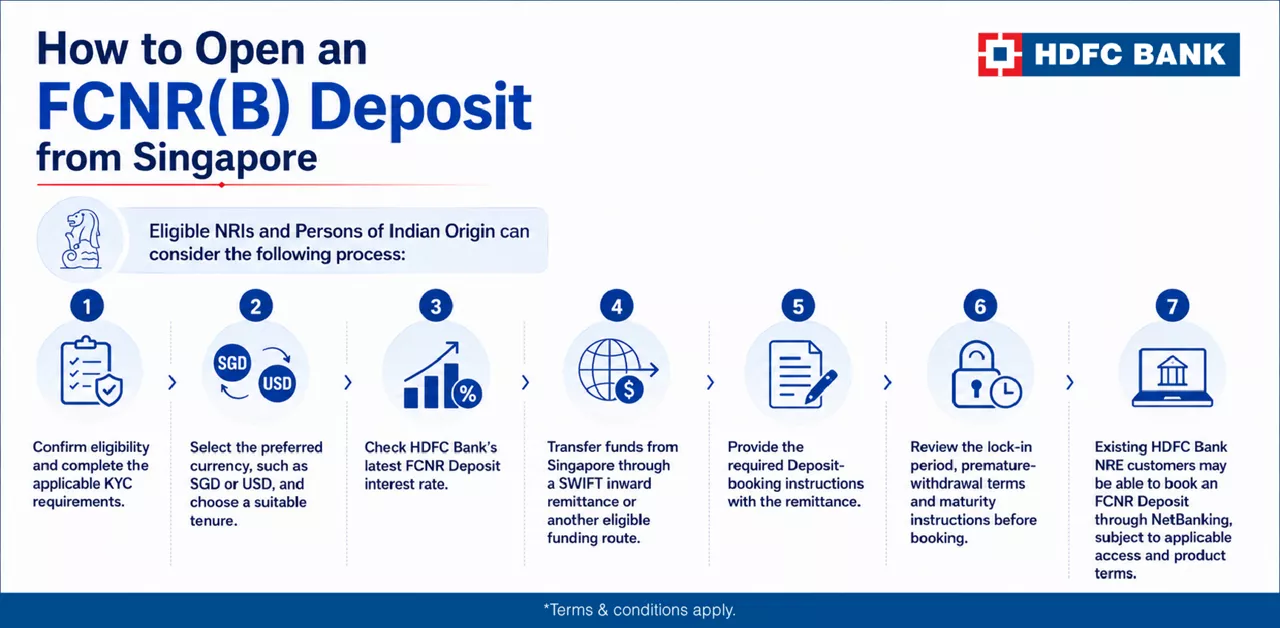
How to Open an FCNR(B) Deposit from Singapore
Eligible NRIs and Persons of Indian Origin can consider the following process:
- Confirm eligibility and complete the applicable KYC requirements.
- Select the preferred currency, such as SGD or USD, and choose a suitable tenure.
- Check HDFC Bank’s latest FCNR Deposit interest rate.
- Transfer funds from Singapore through a SWIFT inward remittance or another eligible funding route.
- Provide the required Deposit-booking instructions with the remittance.
- Review the lock-in period, premature-withdrawal terms and maturity instructions before booking.
Existing HDFC Bank NRE customers may be able to book an FCNR Deposit through NetBanking, subject to applicable access and product terms.
For SWIFT remittances, customers can provide their Customer ID in the beneficiary details and mention the preferred FCNR Deposit tenure in the remittance remarks, as per HDFC Bank’s inward-remittance process.
Conclusion
For NRIs in Singapore, an FCNR(B) Deposit provides an option to maintain foreign-currency savings with an Indian bank without converting the deposit into Indian Rupees.
Before choosing an FCNR(B) Deposit, consider the currency, tenure, liquidity requirements, taxation and future use of the funds. Checking the latest applicable rates and product terms can help you make a more informed decision.
Disclaimer: Terms and conditions apply. The information provided is generic and for informational purposes only. Rates, regulatory requirements and product terms are subject to change. Please refer to HDFC Bank's latest FCNR(B) rate card and applicable terms before making a deposit decision.
Yes. Eligible NRIs can open an FCNR(B) Deposit with an authorised bank in India, subject to applicable regulations and Bank terms.
Yes. HDFC Bank offers FCNR Deposits in SGD, subject to applicable eligibility and product terms.
Interest earned on eligible FCNR(B) Deposits is exempt from income tax in India, subject to applicable regulations and eligibility conditions.
An FCNR(B) Deposit is maintained in an eligible foreign currency, whereas an NRE Fixed Deposit is maintained in Indian Rupees.
Consider the currency, tenure, prevailing interest rate, liquidity, premature withdrawal conditions, taxation and future financial requirements.

Related Blogs


Make the most of your savings with our foreign
currency deposits