FAQ's
Saving Accounts
What is the MICR Code in Passbook?
This blog explains the significance of the MICR Code, a 9-digit number used in bank transactions for cheque clearance. It details how to locate the MICR Code in passbooks and cheques, its structure, and its role in secure banking processes.
Synopsis:
- MICR stands for Magnetic Ink Character Recognition – an important code used in bank transactions.
- The MICR Code is a unique 9-digit code that helps identify banks and their branches.
- This code is typically imprinted on cheque leaves and bank passbooks.
Overview
If you examine a cheque leaf closely, you will notice a series of numbers. You can typically find your account number, IFSC Code, and cheque number, which you must mention on the deposit slip when depositing a cheque in the bank. While these numbers are crucial to ensure your account is correctly credited, the bank focuses on another sequence of numbers when clearing cheques. This code is called the MICR Code.
Let’s learn what it is and how to find the MICR Code in a passbook and cheques.
What is the MICR Code in Passbook and Bank Cheques?
Short for Magnetic Ink Character Recognition (MICR) Code, this 9-digit code helps banks recognise or identify other banks and their branches, typically those participating in the Electronic Clearance System (ECS) Credit scheme. The Reserve Bank of India (RBI) introduced the MICR Code to streamline the processing and clearance of cheque payments.
The RBI assigned each bank a distinctive MICR Code upon its introduction, incorporating unique character recognition technology. This magnetic ink technology, used in cheques, helps banks verify the authenticity of cheques presented for clearance. The MICR Code is an encrypted code that enables banks to differentiate between genuine and counterfeit cheques.
How to Find the MICR Code in a Passbook and Bank Cheques?
The MICR Code is typically printed on the bottom of each cheque leaf, usually next to the 6- digit cheque number. In addition to cheque leaves, you can find the MICR Code on the first page of your bank account’s passbook, which also contains other essential details linked to your bank account, such as your account number, IFSC Code, and customer ID.
Additionally, you can find your MICR Code by:
- Call your bank’s customer care helpline and provide your branch’s name.
- Conducting a quick search on the internet using your bank and branch details.
Breaking Down the MICR Code
Having explained what the MICR Code is in a bank passbook and cheques, let’s break down the sequences of numbers in the code using an example.
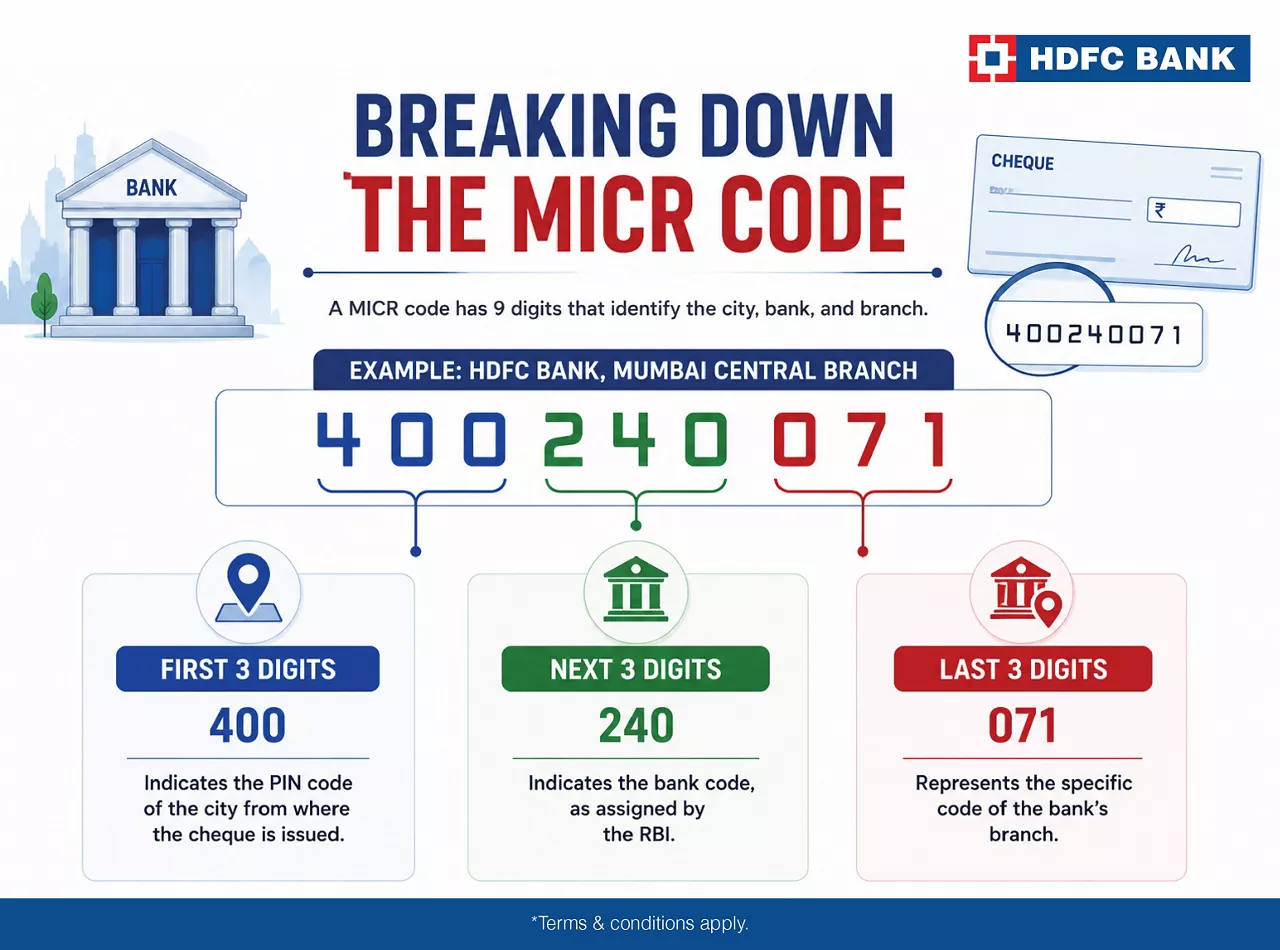
For instance, HDFC Bank has a branch in the Mumbai Central neighbourhood in Mumbai City. The MICR Code for this bank branch is 400240071. This 9-digit code is divided into three sections, each containing three digits:
- The first three digits, ‘400’, indicate the PIN code of the city from which the cheque is issued.
- The next three digits, ‘240’, represent the bank code assigned by the RBI.
- The last three digits, ‘071’, denote the specific branch code of the bank.
When Is the MICR Code Required?
You typically need to provide the MICR Code when filling out financial investment or transaction forms. For example, if you are opening an investment portfolio or investing in mutual funds, you may need to provide a cancelled cheque or enter your MICR Code in the application form. The MICR Code is a barcode for banks to process ECS transactions and initiate investment payments.
Manage Your Bank Transactions Seamlessly – Open an HDFC Bank Savings Account
If you conduct banking transactions frequently, it is essential to familiarise yourself with the various numbers and codes on your cheques and passbooks. As an HDFC Bank account holder, you can find your MICR Code, IFSC Code, Account Number, and other important details on all your bank documents.
Need help locating these numbers? Call our customer care helpline for assistance.
Open your HDFC Bank account today. Click here to get started.
Disclaimer: Terms and conditions apply. The information provided in this article is generic and for informational purposes only. It is not a substitute for specific advice tailored to your circumstances.
The MICR code is usually printed on the first page of your bank passbook along with your account details.
Yes. A MICR code is mainly used for cheque processing, while an IFSC code is used for electronic fund transfers.
It helps banks identify branches and enables faster and more accurate cheque clearing.
No. Each bank branch has its own unique 9-digit MICR code assigned for identification.


