Frequently Asked Questions
Investment
What is IPO: Full Form, Meaning, Types, & Benefits Explained
Explore IPO fundamentals, pricing methods, benefits, risks, and investment process for smarter investing decisions today.
Synopsis:
Discover how IPOs work, their types, benefits, and important factors every investor should understand before investing.
A company's transition from private to public begins with an Initial Public Offering (IPO), allowing it to raise capital by selling shares to investors.
This guide explores IPO types, processes, benefits, and key considerations, helping investors make informed decisions while seizing growth opportunities.
Overview:
An important step in a private company's transition into a publicly traded company is an initial public offering, or IPO. This procedure entails the company's initial public offering of shares, which enables it to raise capital by providing ownership to both individual and institutional investors. This guide explores the specifics of initial public offerings, covering different types, workings, advantages, and important factors.
What is IPO?
An IPO full form is an initial public offering. An IPO is the process through which a private company sells its shares to the public for the first time, transitioning into a publicly traded entity. This allows the company to raise equity capital from public investors and become publicly traded. After the IPO, shares can be bought and sold on stock exchanges, enabling investors to benefit from the company's growth and market value appreciation.
Types of IPO
Investing in an IPO comes with different structures. There are two main types of IPOs:
Fixed Price Offering
The company sets a predetermined issue price for its shares.
Investors know the stock price at the time of the public offering.
Buyers must pay the full share price while applying for the shares.
Book Building Offering
The company provides a price band (typically 20%) for shares.
Investors place bids within this range before the final price is decided.
The floor price is the minimum, and the cap price is the highest limit.
The final share price is determined based on investor demand.
How Does Initial Public Offering (IPO) Work?
Launching an IPO is a complex but structured process. Here’s how it works:
1. Engaging an Underwriter or Investment Bank
Companies hire underwriters or investment banks to assess financial health, manage the IPO process, and connect them with potential investors.
2. Preparing for IPO Registration
The company prepares legal documents, including a Draft Red Herring Prospectus (DRHP), detailing financials, business models, and risk factors.
3. SEBI Approval and Verification
The Securities and Exchange Board of India (SEBI) reviews the company's filings to ensure transparency and regulatory compliance.
4. Listing on Stock Exchanges
Upon approval, the company applies for listing on stock exchanges, allowing public trading of its shares.
5. Strategic Marketing Initiatives
Companies conduct roadshows, investor presentations, and media campaigns to generate interest in the IPO.
6. Setting the Price
Companies determine the final share price using either a Fixed Price Offering or a Book Building Offering.
7. Bidding and Allocation
Investors place bids within the specified range, and shares are allocated based on demand.
8. Listing and Trading
Once allocated, shares start trading on the stock exchange, marking the company's official transition to a publicly traded entity.
What is the IPO Timeline?
The timeline of an IPO consists of several key steps:
Pre-IPO Planning – The company ensures financial and legal readiness.
Filing – The registration statement is submitted to SEBI.
Review Period – The regulatory body examines the filing and requests clarifications.
Roadshow – The company presents its IPO to potential investors.
Pricing – The final price is decided based on market demand.
IPO Launch – Shares are listed, and public trading begins.
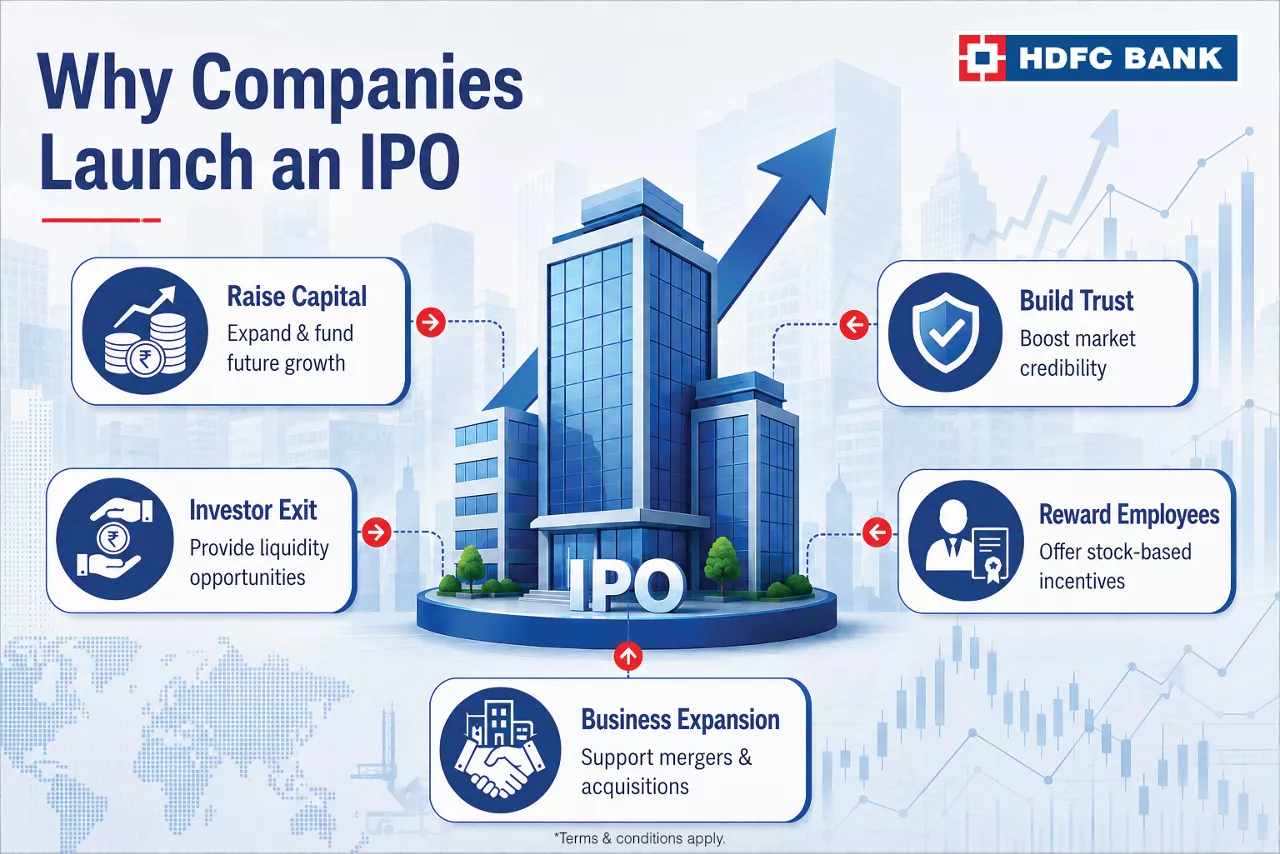
Why does a company offer an IPO?
Companies go public through an IPO for various reasons, including:
Raising Capital: IPO funds help businesses expand, develop new products, and repay debts.
Enhancing Brand Value: A public listing boosts credibility and brand recognition.
Liquidity for Early Investors: Founders and early investors can cash out their investments.
Employee Stock Options: Companies can offer stock-based incentives to employees.
Mergers and Acquisitions: A publicly traded status allows easier collaborations and acquisitions.
Eligibility Criteria for Offering an IPO
Companies must meet specific criteria to offer an IPO in India:
- Legal Incorporation: Must be a registered company under the Companies Act, 2013.
- Financial Track Record: A minimum net tangible asset value and profitability.
- SEBI Compliance: Companies must comply with SEBI's disclosure norms and governance regulations.
- Appointment of Intermediaries: Companies must hire investment bankers, underwriters, and legal advisors.
- Drafting a Prospectus: A DRHP must be submitted, detailing financials, risks, and business strategies.
IPO Advantages and Disadvantages
| Advantages of an IPO | Disadvantages of an IPO |
|---|---|
| Enhances brand credibility and market presence. | Significant expenses, including underwriting and legal fees. |
| Provides funds for growth and expansion. | Companies face expectations for high stock performance. |
| Enables early investors and employees to sell shares. | Public companies must meet strict regulations. |
| Market pricing helps determine a company’s worth. | Share prices fluctuate based on market conditions. |
Conclusion
An IPO provides companies with a gateway to expansion while offering investors a chance to be part of their growth story. Understanding IPO types, processes, and benefits helps investors make informed decisions. With careful research and a strategic approach, investing in IPOs can be a rewarding experience.
Apply for upcoming IPOs effortlessly through HDFC Sky and seize early investment opportunities. Enjoy a seamless, secure, and user-friendly platform for IPO applications. Start your journey today—apply now with HDFC Sky.
*Disclaimer: Terms and conditions apply. This is an information communication from HDFC Bank and should not be considered as a suggestion for investment. Investments in securities market are subject to market risks, read all the related documents carefully before investing.
Investors can buy shares early at a lower price and benefit as the company's value grows.
Yes, retail investors, high-net-worth individuals, and institutional investors can participate in an IPO.
An IPO is open to the public, while private offerings are limited to select investors.
Shares begin trading on the stock market, allowing investors to buy and sell them freely.
Yes, IPO investments carry risks due to market volatility, company performance, and industry trends.
Yes, companies can withdraw an IPO due to poor market conditions or lack of investor interest.
Yes, investors can trade shares once they are listed on the stock exchange unless they are subject to a lock-in period.

Related Blogs


Secure future begins with smart investing