Apply for an HDFC Bank Credit Card
and get instant approval
Cards
What Is CVV In Credit Card?
Learn what the CVV on a credit card is, where to find it, and how it keeps your card transactions secure.
Synopsis:
- The Card Verification Value (CVV) is a security feature for Credit and Debit Cards confirming the cardholder’s identity.
- During transactions, the CVV, along with the card number and expiry date, is sent to the payment processor for real-time verification
- You should keep your CVV confidential, ensure secure online transactions and regularly monitor your Credit Card statements for unauthorised activities.
Overview
Credit Cards have become an integral part of modern financial transactions, offering convenience, security and a host of other benefits. One key security feature embedded in Credit Cards is the Card Verification Value (CVV). Understanding the CVV’s role is crucial for both consumers and businesses to ensure secure transactions. This article explains what does CVV mean in a Credit Card, its importance and its implications for you as a Credit Card user.
What Is CVV In Credit Card?
The Card Verification Value (CVV) is a security feature for Credit and Debit Cards, designed to protect against fraud. This three or four-digit code, typically located on the back of the card, confirms the cardholder’s identity during online or phone transactions. In India, the CVV is typically a three-digit number near the signature panel. It ensures the purchaser has the card, reducing fraud risk in card-not-present transactions like online shopping, as only the cardholder should know the CVV.
How Does CVV Work?
When you, as a cardholder initiate a transaction, you are required to provide the CVV along with the card number and expiry date. This information is then transmitted to the payment processor for verification. The CVV is not stored by merchants, further enhancing security by reducing the risk of data breaches. Instead, the payment processor uses the CVV to validate the transaction in real-time. The CVV is generated through a complex algorithm based on the card number, ensuring that it is unique to each card.
Types of CVV
There are generally two types of CVV codes:
CVV1
This code is embedded in the magnetic stripe of the card and is used when the card is swiped through a point-of-sale terminal. It is not visible to the cardholder and is used to verify in-person transactions.
CVV2
This is the visible three-digit code found on the back of the card and is used for card-not-present transactions. This code is what is commonly referred to when discussing CVV in the context of online and phone transactions.
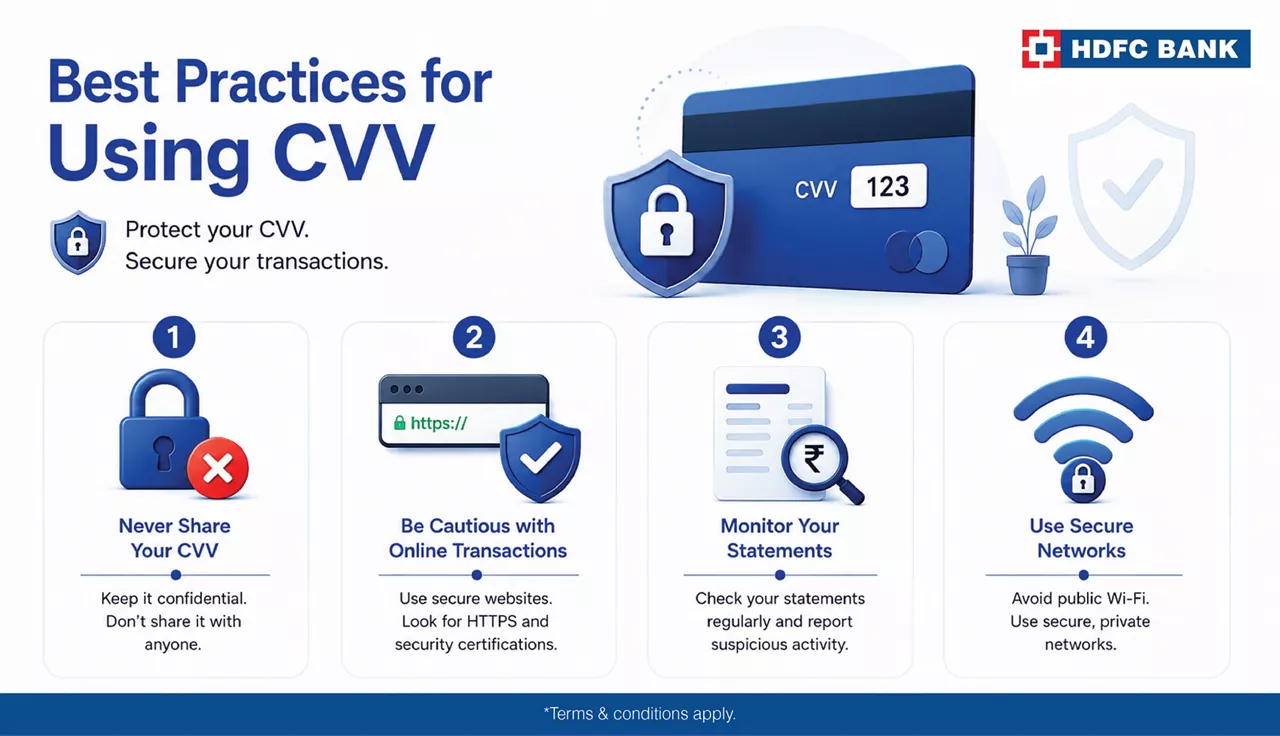
Best Practices for Using CVV
As a consumer, it is essential for you to handle your CVV codes with care to prevent unauthorised access and potential fraud. Here are some best practices for managing CVV security:
Never Share Your CVV: Just like your card number and PIN, your CVV should be kept confidential. Do not share it over email, text message or phone calls unless you are certain of the recipient’s identity and legitimacy.
Be Cautious with Online Transactions: Ensure that the websites you are transacting with are secure. Look for HTTPS in the URL and check for security certifications before entering your CVV.
Monitor Your Statements: Regularly review your Credit Card statements for any unauthorised transactions. Promptly reporting suspicious activity can help mitigate potential losses.
Use Secure Networks: Avoid conducting transactions over public Wi-Fi networks, as these can be vulnerable to hacking. Use secure, private networks when making purchases online.
CVV Helps Secure Your Debit And Credit Cards
HDFC Bank Debit and Credit Cards, secured by CVV, help ensure safe cashless payments. As digital transactions rise, staying informed about security measures like CVV is important for protecting financial data. Start your Credit Card application process here.
*Disclaimer: Terms and conditions apply. The information provided in this article is generic in nature and for informational purposes only. It is not a substitute for specific advice in your own circumstances.