Go digital with a secure, paperless account
Banking Services
Understand debit transactions, their common types and how they affect and help manage your bank balance.
In banking, debit is one of the two types of transactions you can conduct, the other being credit transactions.
Debit transactions occur when funds are removed or withdrawn from an account.
Debit transactions are classified into different types like Debit Card transactions, ATM Withdrawal, Cheque payments and Online transfers.
Your bank passbook, whether offline (on your internet and mobile banking platforms) or online, maintains a chronological record of all your transactions, and your current account balance. The balance is computed based on the funds received in the account or the payments made from the account. The bank typically uses the terms debit and credit to indicate these transactions. In this article, we shall focus on the meaning of debit transactions. Here’s all you need to know.
The definition of ‘debit’ in banking refers to the subtraction of funds from a bank account. When you pay for something, whether it is through a Debit Card, a cheque, or an online transfer, money is withdrawn from your account. This action decreases the available balance in your account, and is known as a debit transaction.
Types of Debit Transactions
Debit transactions manifest in various forms, each serving distinct purposes tailored to meet your diverse needs. Here are the most common types:
Debit Card Transactions
Debit Cards, prevalent in today’s financial landscape, allow you to make purchases or withdraw cash directly from your bank accounts. These transactions are instantaneous, with the funds being debited from the account almost immediately upon authorisation.
ATM Withdrawals
Automated Teller Machines (ATMs) facilitate cash withdrawals round the clock. When you use an ATM to withdraw money, the corresponding amount is debited from your account, reducing the available balance accordingly.
Cheque Payments
Despite the digital revolution, cheque payments continue to remain popular, especially in the case of business transactions. When you issue a cheque, the specified amount is debited from your account once the recipient deposits or cashes the cheque.
Online Transfers
Electronic Fund Transfers (EFTs) enable seamless money transfers between accounts, whether within the same bank or across different financial institutions. When you initiate an online transfer, the designated amount is debited from your account and credited to the recipient’s account.
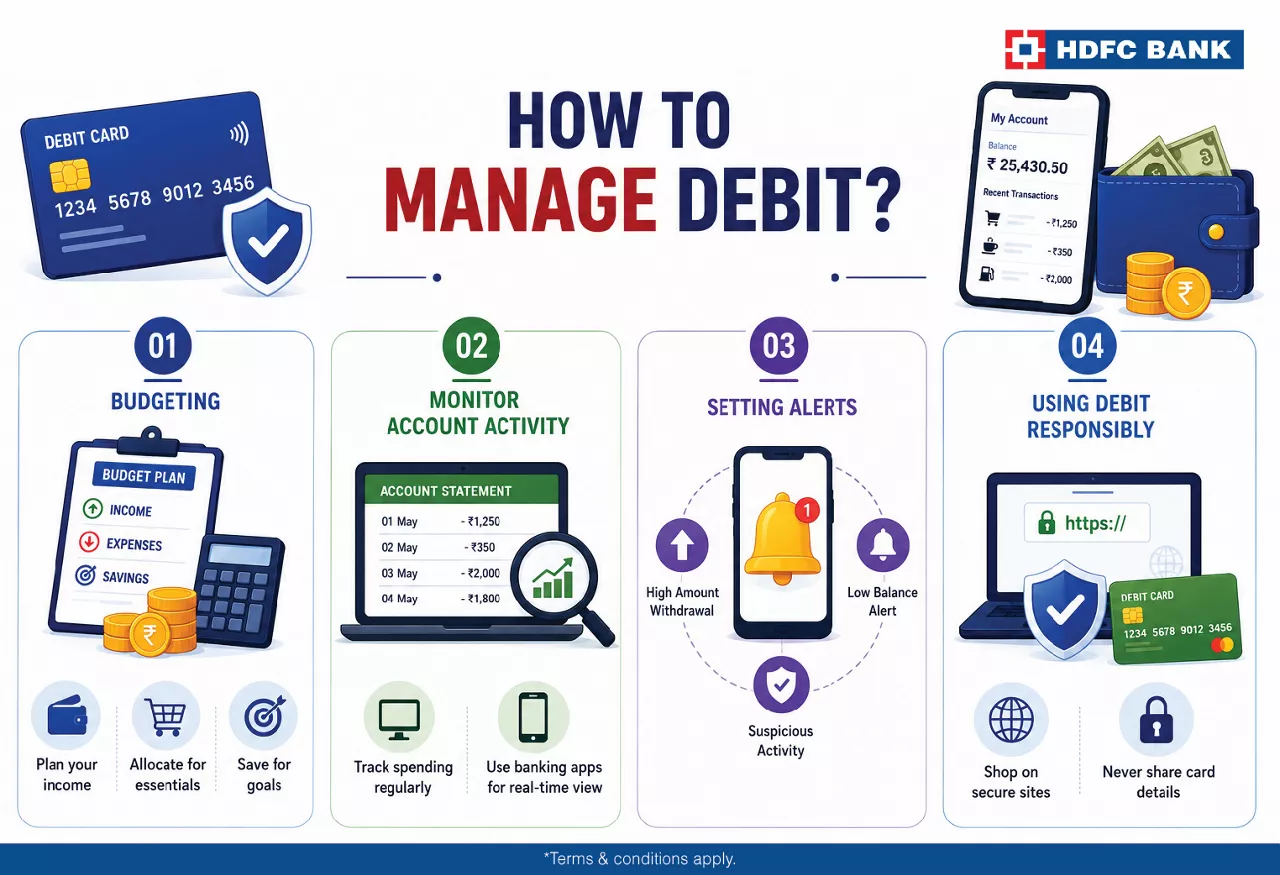
While debit transactions offer unparalleled convenience, prudent financial management is required to avoid overspending. Here are some tips for effectively managing such transactions:
Budgeting
Create a monthly budget outlining your income, expenses, and savings goals. You can also allocate funds for essentials such as groceries, rent, utilities, and so on, while setting aside a portion for discretionary spending.
Monitoring Account Activity
Regularly monitor your bank account statements to track your spending patterns and identify any unauthorised transactions promptly. Most banks offer online banking platforms and mobile apps that enable you to view your transaction history in real-time.
Setting Alerts
Take advantage of alert notification services offered by banks to stay informed about significant account activities, such as high amount withdrawals or low account balances. These alerts can help you detect potential fraud or overspending early on.
Using Debit Responsibly
Exercise caution when using your Debit Card for online transactions, especially on unfamiliar websites. Verify the website’s security credentials and refrain from sharing sensitive information such as card details with unknown entities.
Your banking needs may transcend simple debits. You also need to ensure there is a continuous inflow of funds in your account to make your payments. This, you can do easily with an HDFC Bank Savings Account. You can use your account and the complimentary debit card provided with it to make all sorts of payments effortlessly. Click here to open your HDFC Bank Savings Account.
*Disclaimer: Terms and conditions apply. The information provided in this article is generic in nature and for informational purposes only. It is not a substitute for specific advice in your own circumstances.
Go digital with a secure, paperless account
Frequently Asked Questions
A debit is a transaction that reduces the balance in your bank account.
Debit Card payments, ATM withdrawals, cheque payments and online fund transfers are common debit transactions.
A debit generally reduces your bank balance, while a credit generally adds funds to your account.
Debit Card transactions generally reduce the available balance after the transaction is successfully authorised and processed.
You can track them through your bank statement, NetBanking, MobileBanking or transaction alerts.
Report it to your bank promptly and follow the recommended steps to secure your account.

Go digital with a secure, paperless account.
